
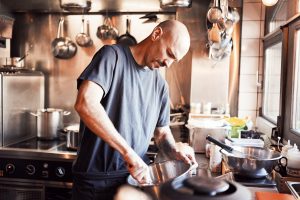
A NEW CHAPTER AT BRASSERIE UNO
Curious about the mind behind the menu? We sit down with Head Chef Tommaso Guardascione to explore his culinary inspirations, the philosophy that guides his cooking and the passion that drives him to create memorable dining experiences…
5 QUESTIONS WITH BRASSERIE UNO HEAD CHEF TOMMASO GUARDASCIONE
With more than 17 years of experience in some of the finest kitchens in the industry, Tommaso brings an exceptional blend of culinary expertise, creativity and passion to Brasserie Uno in his new role as head chef. After studying Culinary Arts at École Hôtelière d’Avignon in France, he went on to work alongside renowned chefs including Alain Ducasse and Serge Chenet, who is a recipient of the prestigious Meilleur Ouvrier de France distinction.
From Michelin-starred restaurants to five-star hotels, Tommaso has built an impressive career rooted in precision, craftsmanship and a deep respect for culinary tradition. As sous chef at Brasserie Uno for five years, he played an instrumental role in the kitchen team alongside previous Brasserie Uno head chef Luis Romo, when the restaurant was awarded both a Michelin Star and a Michelin Green Star in 2022 – accolades the restaurant has continued to receive until present day.
Now, we are delighted to welcome Tommaso as Head Chef from the winter season of 2026/2027. With five years of experience within the Brasserie Uno 2-square metre kitchen, he combines an intimate understanding of the restaurant’s identity with a fresh vision for its future. With his Italian heritage, mastery of French techniques,and distinctive creative flair, Tommaso is set to bring new energy to the kitchen while building on the culinary excellence that defines Brasserie Uno. We look forward to this exciting new chapter under his leadership.
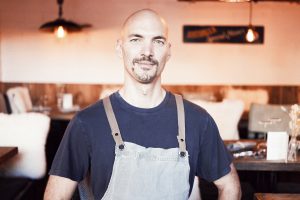
1. WHY DID YOU WANT TO BECOME A CHEF?
“As an Italian with an Italian mama and nonna, I always had my nose in the kitchen. The table is an extremely important sharing moment, especially in Italian culture, so sitting down and having everyone eating together was always special to me. Cooking also provides a lot of possibilities for expression: it has some strictness to it but it also allows for imagination and creativity. To find job where you get both is difficult, which is why I enjoy what I do.”
2. HOW IMPORTANT IS ITALIAN CULTURE TO YOUR COOKING?
“It all starts with my Italian heritage combined with French knowledge. There’s something very unique about the Italian food culture – it’s very product based and simple. We have a gigantic choice of products, most of which are unique and extraordinary, and we tend to not overwork things – we just use them as they are. I am a market kind of person – my family is from Naples originally and then we moved to Tuscany and we would be in the market every day. It’s not like once a week; you go to the market every day and everything is fresh. For me it’s normal and how it should be. Many times I’ll walk around the market and see something and want to cook it and that’s my approach. I am impulsive and passionate when it comes to food and it always starts from the product up, always trying to as little as possible to the product. That can be hard as a chef, as you always want to put something of yourself to the dish that people can recognise, but I feel like there is no need for ego if you find good products – you just propose it as simple as it is.”
3. WHAT INSPIRES YOU TO CREATE NEW DISHES?
“It’s mainly the products. If I see something I like, I think, what can I do with it and how can I cook it in a unique or special way that guests will enjoy. When I’m cooking for friends or family, it’s about creating a feeling, but in a restaurant, it’s more complicated. For example, with friends and family, joyful moments can be transformed by the things you cook and the way you present it. You can create a family style table with all the dishes in the middle so people can connect with the food and each other, or you can create formality by giving everyone their own plate and the way you decorate the dish, but it all depends on the mood. Luis and I laugh about it sometimes because when I cook, the kitchen goes in the direction of my feelings and emotions – there are days when I’m not into the mood and as much as I try, it just doesn’t work, but when I’m into it everything is great.”
4. HOW IMPORTANT IS REGIONAL AND SEASONAL TO YOU?
“Right now everyone is very aware of sustainability and bio products, but the idea of local and bio is not new for me. I was brought up with a vegetable garden – we were a family of four and although we didn’t grow 100% of our food, I’d say 40% of what we ate came from the garden. We also had chickens and rabbits, so for me it was always normal to use local products, but in the mountains it’s complicated, especially in the winter. I prefer to use local and seasonal and I like the concept of waiting for something – it makes it more special. For example, I love asparagus and I love that you only can eat it for two months of the year. When the season is over, you go on to the next thing.”
5. AT BRASSERIE UNO, WE ARE A MINIMAL FOOD-WASTE RESTAURANT. HOW DO YOU INCORPORATE THAT CONCEPT INTO THE KITCHEN?
“Before I became a chef, I was studying to be an environmental engineer and for me, sustainability in the hospitality industry is about looking at the concept as a whole: Where does the electricity come from? How do you take care of your waste? Do you plate smaller portions so there’s less food waste on the plate? So much of the food that gets thrown away in restaurants is because of what’s not eaten on the plate, so if you truly want to tackle sustainability, we need to start asking the right questions. I’m not sure people are ready for that – they want a big plate of food, but if you don’t eat it all, it’s a waste. At Brasserie Uno, there is almost nothing coming back on the plate, partly because our portions are not big but not small either – they are just the right size to enjoy the taste while leaving enough space to eat all the courses. We honestly have one of the smallest trash containers of any place I’ve ever worked at. I remember the first time I saw the food-waste bin, I thought, wow, we are going to have to go to the outside food bin many times during the night, but we don’t because we hardly throw anything away.”
Thank you to Dominique Derisbourg for the photography.

